
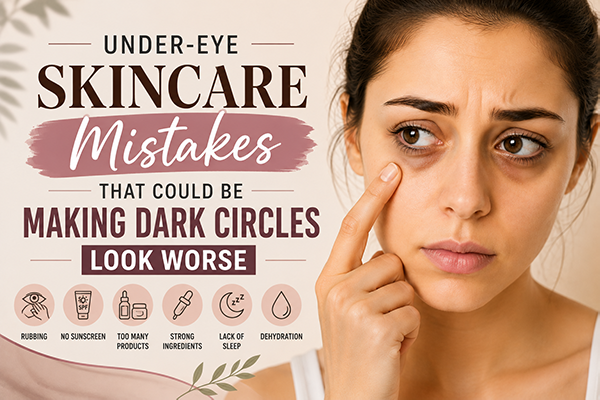
Dark circles can be frustrating, especially when you are already using eye creams, serums and a carefully planned skincare routine.
Sometimes, though, adding another product isn’t the answer.
Some everyday under-eye skincare mistakes can leave this delicate area dry, irritated or puffy, which may make existing dark circles look more noticeable. And skincare isn’t always the underlying issue. Genetics, aging, allergies, lack of sleep, dehydration and increased pigmentation can all contribute to dark circles.
That means improving their appearance starts with understanding what may be causing them rather than simply buying the strongest brightening product you can find.
Below are 10 common mistakes worth checking in your routine, along with practical ways to give the skin around your eyes gentler, more appropriate care.
Why Do Dark Circles Appear Under the Eyes?
Before changing your skincare routine, it helps to understand that dark circles under the eyes aren’t all the same.
The skin beneath your eyes is naturally thin. With age, it can become thinner and looser, making underlying blood vessels more noticeable. Changes in facial volume can also create hollows or tear troughs that cast shadows and make the area appear darker.
Other potential contributors include:
- Genetics
- Lack of sleep
- Allergies
- Eye rubbing
- Dermatitis
- Sun exposure and pigmentation
- Dehydration
- Aging
- Lifestyle factors
- Under-eye hollows and shadows
This is why one person’s favorite eye cream may do very little for someone else.
If your darkness is mainly caused by pigmentation, your approach may be different from someone whose under-eye circles are primarily caused by facial structure or visible blood vessels.
Understanding that distinction can save you a lot of unnecessary experimentation.
1. Rubbing Your Eyes Too Often
This is one of the easiest habits to overlook.
When your eyes are tired, itchy or irritated, rubbing them feels almost automatic. Unfortunately, repeated rubbing can irritate the delicate skin around the eyes and contribute to swelling. Cleveland Clinic also identifies rubbing and scratching the eyes as a factor that can worsen the appearance of dark circles.
Allergies can make the problem worse.
People with allergic rhinitis may develop dark discoloration known as “allergic shiners.” Itchy or watery eyes can encourage more rubbing, adding further irritation.
What to do instead
Try to identify why your eyes feel itchy in the first place.
If seasonal or environmental allergies are causing persistent itching, treating the underlying allergy with guidance from an appropriate healthcare professional may be more useful than repeatedly applying cosmetic products.
When cleansing or removing makeup, use gentle movements rather than aggressively rubbing the area.
2. Skipping Sunscreen Around Your Eyes
You might apply sunscreen to your forehead, cheeks and nose every morning but stop when you reach your eye area.
That can leave an important area unprotected.
Sun exposure can increase melanin production, which may contribute to hyperpigmentation and make some types of dark circles more noticeable. Sun protection is therefore an important part of preventing pigmentation from becoming more pronounced.
A better approach
Use a broad-spectrum sunscreen appropriate for your skin and follow its application directions.
Don’t forget other forms of sun protection either. Sunglasses can provide additional protection for the eye area while also reducing the tendency to squint in bright sunlight.
If sunscreen tends to sting your eyes, look for a formula you tolerate well rather than simply avoiding sun protection around the area.
3. Using Strong Skincare Ingredients Too Close to Your Eyes
More powerful does not automatically mean more effective.
Products formulated for the rest of your face may contain ingredients that your eye area doesn’t tolerate as well.
Retinoids are a good example.
Retinoids can help with concerns such as uneven pigmentation and fine lines, but they can also cause irritation, particularly when introduced too aggressively. The American Academy of Dermatology recommends starting carefully and notes that irritation can contribute to dark marks, particularly in darker skin tones.
What to do
Follow the directions for the specific product you’re using.
If a product isn’t intended for the eye area, don’t assume that moving it closer to your eyelids will produce faster results.
With ingredients such as retinol, stronger concentrations and more frequent applications aren’t necessarily better. If you’re unsure whether a particular active ingredient is suitable around your eyes, a dermatologist can help you choose an appropriate approach.
4. Using Too Many Under-Eye Products at Once
A caffeine serum in the morning.
Vitamin C next.
An eye cream.
Retinol at night.
Maybe an exfoliating product because you want faster brightening.
It’s easy for a routine designed to treat dark circles to become unnecessarily complicated.
Using several active products at the same time also makes it difficult to identify what’s causing irritation if your skin reacts.
Keep your routine simple
A practical routine doesn’t need ten products.
For many people, the foundation is simply:
Gentle cleansing + appropriate moisturizer + daily sun protection
Then you can consider adding a targeted product based on the specific concern you’re trying to address.
Introduce new products gradually rather than starting several on the same day.
The American Academy of Dermatology also recommends testing skincare products before incorporating them fully into your routine, particularly if you have sensitive skin.
5. Assuming Every Dark Circle Is Hyperpigmentation
This is probably one of the biggest mistakes people make when choosing products.
You see darkness, so you buy a brightening serum.
But the dark appearance may not be caused entirely by excess pigment.
Under-eye darkness can result from visible blood vessels beneath thin skin, pigmentation, puffiness, allergies, aging or shadows created by tear troughs and facial structure.
A brightening ingredient cannot completely correct a shadow created by facial anatomy.
Look at the cause before the product
Ask yourself:
Does the darkness change depending on the lighting?
Is the area also puffy?
Have you always had dark circles?
Do close family members have them?
Do your eyes become itchy during allergy season?
Is the skin actually darker, or does the area appear hollow?
You don’t need to diagnose yourself from these questions. They’re simply useful clues showing why a one-size-fits-all approach to dark circles often disappoints.
6. Neglecting Moisture Because Your Skin Is Oily
Having oily skin doesn’t mean the delicate eye area cannot become dry.
Weather, low humidity, cleansing products, skincare products and environmental irritants can all contribute to dry eyelid skin.
Dryness can make the area look dull and may emphasize texture, which can make shadows and discoloration appear more obvious.
What helps
Choose a gentle moisturizer appropriate for the eye area and your skin type.
You don’t necessarily need an expensive dedicated eye cream. What matters more is whether the formula is suitable for the area, supports hydration and doesn’t cause irritation.
If you regularly experience significant dryness, itching, flaking or redness around the eyelids, don’t simply keep layering cosmetic products over it. Persistent symptoms can be associated with conditions such as eyelid dermatitis and may warrant professional evaluation.
7. Removing Eye Makeup Too Aggressively
Waterproof mascara and long-wear eyeliner can take some effort to remove.
But scrubbing your eyelids and under-eye area every night isn’t a good solution.
Think of makeup removal as dissolving and lifting rather than scrubbing.
Try this approach
Use an eye-area-appropriate makeup remover or gentle cleanser according to its directions.
Give it enough time to loosen the makeup, then wipe gently.
If you have to scrub repeatedly every night, your makeup-removal method or product may not be the best match for what you’re wearing.
The goal is simple: remove the makeup without turning your nightly routine into repeated friction around an already delicate area.
8. Ignoring Sleep and Expecting Eye Cream to Fix Everything
We’ve all seen eye creams marketed as though they can erase the evidence of a terrible night’s sleep.
Skincare has limits.
Lack of sleep can make the skin appear paler, allowing underlying blood vessels to become more visible. Fatigue is also recognized as a common contributor to the appearance of dark circles.
That doesn’t mean everyone with dark circles needs more sleep. Genetics and other factors can still be responsible.
But if your dark circles consistently look worse after several late nights, your routine may need to include better sleep habits as well as skincare.
Make sleep part of your eye-care routine
Aim for a consistent sleep schedule rather than expecting one long weekend sleep to compensate for an irregular week.
Cleveland Clinic recommends at least seven hours of sleep per night as one measure that may help reduce the appearance of under-eye shadows.
Your eye cream can complement healthy habits. It can’t replace them.
9. Ignoring Allergies and Constantly Treating the Pigmentation
Sometimes what looks like a skincare problem has another trigger.
Allergic rhinitis can cause dark, discolored areas beneath the eyes known as allergic shiners. Nasal congestion can affect blood flow in veins near the eyes, creating a darker, puffy appearance.
You might also experience:
- Sneezing
- Nasal congestion
- Runny nose
- Itchy eyes
- Watery or red eyes
- Itchy nose or throat
If those symptoms sound familiar, repeatedly buying new brightening creams may not address the main issue.
Consider discussing persistent allergy symptoms with a healthcare professional.
10. Expecting Instant Results and Constantly Changing Products
You use an eye cream for a week.
Nothing dramatic happens.
So you buy another.
Two weeks later, you switch again.
This cycle makes it difficult to determine whether a product works for you and increases the number of ingredients your skin has to tolerate.
Under-eye concerns often don’t have overnight solutions, particularly when genetics, facial anatomy or aging are major contributors.
Give your routine some consistency
Use products according to their directions and monitor how your skin responds.
If something causes significant burning, itching, redness or swelling, stop treating discomfort as evidence that the product is “working.”
Skin irritation isn’t a shortcut to brighter under-eyes.
A Simple Under-Eye Skincare Routine
If your current routine feels complicated, simplify it.
Morning
- Gentle cleansing
Avoid aggressive rubbing around the eyes.
- Moisturizer
Use a suitable moisturizer if your eye area feels dry.
- Targeted product, if needed
Choose products based on your actual concern rather than whatever ingredient is trending.
- Sunscreen
Apply appropriate broad-spectrum sun protection and consider UV-protective sunglasses outdoors.
Evening
- Remove makeup gently
Dissolve stubborn eye makeup instead of scrubbing it away.
- Cleanse
Use a gentle cleanser appropriate for your skin.
- Apply targeted skincare carefully
If you’re using retinol or another active, follow the product instructions and avoid introducing too many actives simultaneously.
- Moisturize
Finish with a moisturizer that your skin tolerates well.
A consistent four-step routine that doesn’t irritate your skin is often more sensible than constantly rotating through complicated routines.
When Should You See a Dermatologist?
Dark circles are extremely common and usually aren’t a sign of a serious medical condition.
Still, professional advice can be helpful when your dark circles are persistent and you’re unsure of the cause, especially if you’re considering stronger treatments.
You should also seek medical advice if you develop unexplained dark discoloration or swelling under only one eye. Cleveland Clinic specifically recommends contacting a healthcare provider in this situation because an underlying condition may need to be ruled out.
A dermatologist can also help distinguish pigmentation-related darkness from concerns caused primarily by skin changes or facial structure and discuss suitable treatment options.
Frequently Asked Questions About Dark Circles
Can skincare actually reduce dark circles?
It depends on the cause. Skincare may improve certain concerns such as dryness or some types of pigmentation, but it cannot completely change genetic traits or facial structure. Identifying the likely cause is an important first step.
Can rubbing your eyes make dark circles worse?
Yes. Repeated rubbing can contribute to irritation and swelling around the eyes. It may be particularly problematic when allergies are making your eyes itchy.
Does sunscreen help with dark circles?
Sun protection can help prevent UV exposure from contributing to increased pigmentation. Cleveland Clinic recommends sun protection around the eyes as one way to help prevent dark circles from worsening.
Does lack of sleep cause dark circles?
Lack of sleep is one potential contributor. Poor sleep can make the skin look paler, allowing underlying blood vessels to appear more noticeable. However, sleep isn’t the only cause of dark circles.
Can retinol make dark circles worse?
Retinol doesn’t inherently make dark circles worse, but retinoids can irritate the skin when used improperly or when they aren’t well tolerated. Irritation can contribute to hyperpigmentation in some people. Start cautiously and follow professional or product guidance.
Why are my dark circles not improving?
Your dark circles may be influenced by genetics, aging, allergies, pigmentation, visible blood vessels, lifestyle factors or under-eye hollows. If your skincare isn’t helping, the underlying cause may not be something a cosmetic product can fully address.
Final Thoughts
The best under-eye routine isn’t necessarily the one with the most products.
If you’re concerned about dark circles, start by eliminating common under-eye skincare mistakes: rubbing your eyes, skipping sun protection, overusing active ingredients, scrubbing away makeup and constantly switching products.
Then look beyond skincare.
Sleep, allergies, genetics, aging and facial structure can all affect how your under-eye area looks. Once you understand that, it becomes much easier to set realistic expectations and choose products based on what your skin actually needs.
Keep your routine gentle, protect the area from the sun and give your skin time to respond. If your dark circles remain persistent or you’re unsure what’s causing them, consider speaking with a dermatologist rather than endlessly adding new products.